Most people asking “how much protein should I eat?” have already been given three different answers, and none of them came with a reason. Here is the number, where it comes from, and what actually changes it.
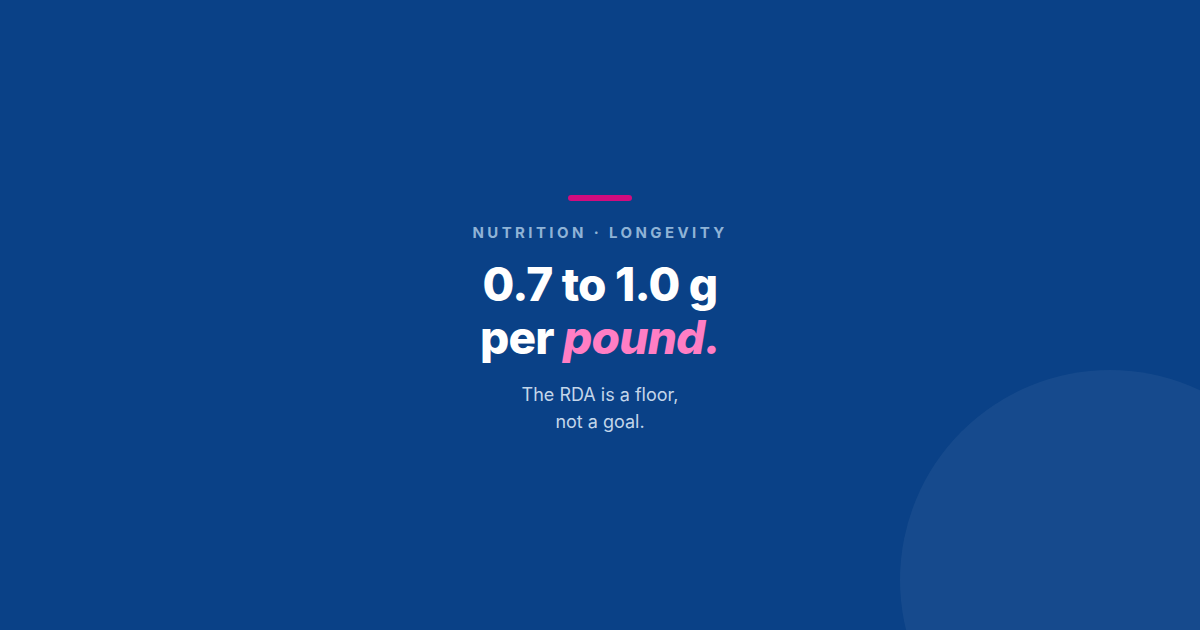
The short version: 0.7 to 1.0 grams of protein per pound of bodyweight per day, or 1.6 to 2.2 grams per kilogram. For a 130 lb woman that is roughly 90 to 130 grams. For a 160 lb woman, 110 to 160 grams. For a 200 lb man training regularly, it lands closer to 140 to 200.
Want your own numbers? Use the free macro calculator to get your daily protein, carbohydrate and fat targets. It takes about a minute, and you can add your InBody body fat percentage for a more accurate result.
Why the number you were given is probably too low
The figure most people half-remember is the Recommended Dietary Allowance, and it was never designed to be a performance target. It is the amount that prevents deficiency in a sedentary adult. It is a floor.
Everything people actually want from protein sits above that floor: holding on to muscle while losing fat, staying full between meals, recovering from training, protecting strength through midlife. Eating at the floor is not a failure, but it will not deliver those things.
That is why 100 grams is best described as a starting point rather than a ceiling. It is the minimum effective dose for most women, not the goal.
Bodyweight is the rough guide. Lean mass is the better one
Protein requirements track the tissue that actually uses protein, which is lean mass, not total bodyweight. Two people at the same weight with very different body compositions do not need the same amount.
This is why every Yoo Direct Health patient gets an InBody scan twice a year. The target gets built around lean mass rather than the number on the scale, and it can be tracked over time rather than guessed at. If you have had a scan, use that body fat percentage in the calculator and the answer gets meaningfully more accurate.
What actually changes your number
You are training, especially lifting
Resistance training raises protein requirements, and the two work together rather than independently. Worth being blunt about the order of importance: exercise, particularly resistance training, matters even more than dietary protein for maintaining muscle mass. Protein is the supporting factor, not the main event.
If you are choosing where to put your effort first, put it in the gym. Then feed it. There is more on why that matters as you age in the guide to resistance training and muscle preservation.
You are on a GLP-1
This is where getting protein wrong is most expensive. GLP-1 medications like semaglutide and tirzepatide work by reducing appetite, slowing gastric emptying, helping regulate blood sugar and reducing overall food intake. That is the mechanism, and it works.
But if you are eating less and not deliberately prioritizing protein, the weight you lose will be muscle as well as fat. That is the outcome most people do not see coming, and it is what slows metabolism and undermines the result long term. Losing weight and losing the right kind of weight are not the same project.
On a GLP-1, appetite is lower, so protein has to be deliberate rather than incidental. Drinkable protein is often easier to get down than a plate of food. Hydration gets harder too, covered separately in staying hydrated on a GLP-1.
You are in perimenopause or menopause
Body composition shifts during this transition. Declining estrogen, rising cortisol, natural muscle loss and reduced insulin sensitivity all nudge the body toward storing fat around the midsection. Protein and strength training are two of the few levers that push back directly.
If the fatigue and the weight changes arrived together and nothing you did before is working, that combination has a cause. More on it in menopause fatigue and weight gain in your 50s.
You are a man focused on fat loss, muscle or hormone health
For men in that position, a daily intake around 200 grams is strategic rather than excessive, particularly when using GLP-1 medications, actively losing weight, training regularly, or focused on long-term metabolic health. Typical intake sits nearer 80 to 120 grams, which is why the number sounds extreme to people hearing it for the first time. The full case is in why 200 grams of protein matters for men.
Why most people fall short without realizing it
The pattern is remarkably consistent:
- Breakfast is mostly carbohydrates
- Lunch is inconsistent
- Dinner is expected to carry the whole day
- Snacks are low in protein
The day ends at 40 to 60 grams and the person wonders why they are hungry, or why progress stalled. Breakfast is almost always where the gap is. Most people start the day at ten to fifteen grams and never catch up.
One clarification worth making, because it gets overcomplicated: you do not need to distribute protein perfectly across the day. Research suggests that as long as total intake is sufficient, the timing and spread across meals matters less. Hit the total. Do not build a spreadsheet.
The shift that makes it work
Stop asking “how do I get to my number?” Start asking “where is the protein in this meal?”
That one change does most of the work, because it turns a daily arithmetic problem into four small decisions you were already making.
What a day actually looks like
The math is less intimidating when you see it laid out. A 100 gram day is roughly 25 to 30 at breakfast, 30 to 35 at lunch, 30 to 35 at dinner and 10 to 20 in a snack. A 150 gram day is the same shape with about twelve more grams at each meal, which is one extra egg, two more ounces of meat, or half a scoop in the yogurt.
Two anchors worth memorizing: a palm-sized piece of meat or fish is about 30 grams, and one scoop of protein powder is about 20 to 25.
The walkthrough of getting 100 grams of protein a day has the meals written out, with two options for each.
Take it with you
The protein sheets patients leave with.
The same one-pagers handed out at the office. Print them, stick one on the fridge, take the list to the shop.
Protein List
1 page · PDF
Download →
When Cooking Is Not Happening
2 pages · PDF
Download →
100 Grams a Day
1 page · PDF
Download →
150 Grams a Day
1 page · PDF
Download →
General education, not a substitute for personal medical advice.
Where the protein comes from
Animal sources, including lean meats, poultry, fish, eggs and dairy, contain all the essential amino acids your body cannot make on its own. Worth being mindful of saturated fat, particularly in red meat and full-fat dairy, and choosing lean cuts and varying sources helps manage that.
Plant sources, including beans, lentils, tofu, tempeh, pumpkin seeds and whole grains like quinoa, bring fiber alongside the protein, which helps with fullness. Most plant foods are lower in one or more essential amino acids, but eating a variety across the day covers it. They do not need to be paired at the same meal.
Then there is the category that has changed most in the last two years: protein waters at 15 to 20 grams a bottle, ready-to-drink protein coffees at 10 to 30, and shakes running as high as 40. These are not better than food. They are better than skipping, which is the actual choice on a busy day.
If you use powders, look for NSF Certified for Sport or Informed Sport on the label. Those certifications confirm that what is on the label is what is in the tub.
What falling short costs
Over time, chronically under-eating protein shows up as lost lean muscle, a slower metabolism, more visceral fat, reduced strength and, in men, lower testosterone. None of it arrives suddenly. That is exactly why it goes unnoticed.
Can you overdo it?
Past your target, extra protein is mostly just extra calories. More importantly, consuming considerably more than you need, particularly from animal sources, can place additional strain on the kidneys and liver, which matters if you have a pre-existing condition. Some people also experience digestive upset or allergic reactions to particular protein sources.
If you have kidney or liver disease, your protein target is a conversation with your provider rather than a general guideline. If you notice unusual symptoms, contact your healthcare provider.
Start with your number
Everything above is easier once you know what you are aiming at. Run the macro calculator, take a minute over it, and add your InBody body fat percentage if you have had a scan.
If you are a Yoo Direct Health patient and you are not sure whether your target is right for what you are doing, bring it up at your next visit. Your number should follow your goals, your training and your lean mass, not a figure you read somewhere.
This article is general education and not a substitute for personal medical advice.