
Protein is one of the most underutilized tools in men’s health.
Want your own numbers? Use our free macro calculator to get your daily protein, carbohydrate and fat targets. It takes about a minute, and you can add your InBody body fat percentage for a more accurate result.
According to the National Academy of Medicine, adults should aim for a recommended daily intake of protein based on body weight, but individual needs may vary depending on activity level and health goals.
For men focused on fat loss, muscle preservation, hormone health, and longevity, a daily intake of 200 grams of protein is not excessive. It is strategic. The body requires nine essential amino acids from dietary sources, which are found in both animal and plant foods. These amino acids are crucial for building and repairing muscle, supporting enzyme activity, and maintaining hormone production.
This becomes even more important if you are:
- Using GLP 1 medications
- Actively trying to lose weight
- Training regularly
- Focused on long term metabolic health
Regular exercise, in combination with adequate protein intake, is essential for optimal health outcomes.
Proteins are made from over twenty different amino acids, which are the building blocks necessary for various bodily functions, including enzyme activity and hormone production.
Introduction to Protein
Protein is fundamental to human health, making up about 15% of an adult’s body weight and serving as a core component of every cell, tissue, and organ. At its core, protein is made up of amino acids—the building blocks that support countless functions in the body. Of the twenty amino acids, nine are considered essential amino acids, meaning the body cannot produce them on its own and they must be obtained through dietary protein.
High protein diets have been widely studied in nutrition research and are linked to a range of health benefits. Consuming enough protein from different foods helps regulate blood sugar, supports muscle mass, and aids in weight loss and weight management. For men, especially those focused on muscle growth or weight loss, ensuring adequate intake of dietary protein is crucial for maintaining body weight, muscle, and overall health.
To get all the essential amino acids, it’s important to include a variety of protein foods in your diet. Both animal sources (like chicken, beef, fish, and eggs) and plant proteins (such as beans, lentils, pumpkin seeds, and sesame seeds) contribute to meeting your body’s needs. By eating enough protein from diverse food sources, you provide your body with the building blocks it needs for muscle, blood, and tissue health.
The Real Issue: Most Men Are Undereating Protein
Even men who prioritize health often fall short on protein. The National Academy of Medicine recommends that adults consume at least 0.8 grams of protein per kilogram of body weight per day, but individual needs may vary based on age, activity level, and health goals. Knowing how much protein you need is essential for maintaining optimal health.
Typical intake:
- 80 to 120 grams per day
What this leads to over time:
- Loss of lean muscle mass
- Slower metabolism
- Increased visceral fat
- Reduced strength and performance
- Lower testosterone levels
It’s important to note that even small amounts of processed red meat have been linked to increased risks of heart disease, stroke, and overall mortality, highlighting the importance of choosing high-quality protein sources.
At Yoo Direct Health, we see this clearly through InBody scans and lab data. Weight loss without adequate protein often results in muscle loss, not just fat loss.
Why 200 Grams Is the Target for High Protein Diets
A higher protein intake supports multiple systems in the body.
At 200 grams per day, men are more likely to:
- Preserve lean muscle during fat loss
- Improve insulin sensitivity
- Increase satiety and reduce cravings
- Support hormone production
- Maintain metabolic rate
- Improve recovery from training
Muscle is not just aesthetic. It directly impacts longevity, metabolic health, and disease risk.
The American Heart Association recommends consuming fish 2-3 times per week, focusing on lean, unprocessed meats, and including plant foods as important protein sources for a balanced and heart-healthy diet.
Protein and GLP 1 Therapy
GLP 1 medications reduce appetite, which can be beneficial, but also creates risk.
Common issue with GLP 1 use
• Patients eat significantly less overall
• Protein intake drops unintentionally
• Muscle loss accelerates
Why protein matters even more on GLP 1s
• Helps preserve lean mass during rapid weight loss
• Maintains metabolic rate
• Reduces risk of rebound weight gain
• Supports better body composition outcomes
Clinical focus at Yoo Direct Health
• Protect muscle while reducing fat
• Use protein as a primary tool to support this
Protein, Muscle, and Longevity
Muscle mass is one of the strongest predictors of long term health outcomes.
Adequate protein intake supports
• Muscle protein synthesis
• Mitochondrial function
• Immune system resilience
• Cognitive health
• Recovery and tissue repair
Risks of low muscle mass
• Higher risk of chronic disease
• Increased frailty with age
• Reduced lifespan
Maintaining muscle is a core longevity strategy.
The Role of Weight Training
Exercise, particularly resistance training, is essential alongside protein intake to preserve muscle.
Resistance training provides the stimulus needed for muscle maintenance and growth.
Benefits of weight training:
- Increases lean muscle mass
- Improves insulin sensitivity
- Supports testosterone levels
- Enhances metabolic flexibility
- Improves strength and function
Recommended baseline
- 3 to 4 strength training sessions per week
Without resistance training, the body has less reason to maintain muscle, even with higher protein intake.
Where Perfect Aminos Fit
Whole food protein should always be the foundation, but there are situations where supplementation can help.
Perfect Aminos provide essential amino acids in a highly bioavailable form.
Protein shakes are another popular supplement option, often used to support muscle growth and recovery.
Best use cases:
- Low appetite on GLP 1 therapy
- Between meals to support muscle preservation
- Around workouts to enhance recovery
Many protein shakes and supplements contain added vitamins, so it’s important to read labels to understand their nutritional content.
Key point: They support protein intake but do not replace whole food protein
How to Structure 200 Grams of Protein Per Day
The key is distribution across meals.
General framework:
- Breakfast 40 to 50 grams
- Lunch 45 to 55 grams
- Dinner 45 to 55 grams
- Additional protein from snacks or add ons
Consuming large amounts of protein in a single meal may not be as effective as spreading your intake throughout the day, as optimal muscle protein synthesis is supported by distributing protein across multiple meals.
This supports consistent muscle protein synthesis throughout the day.
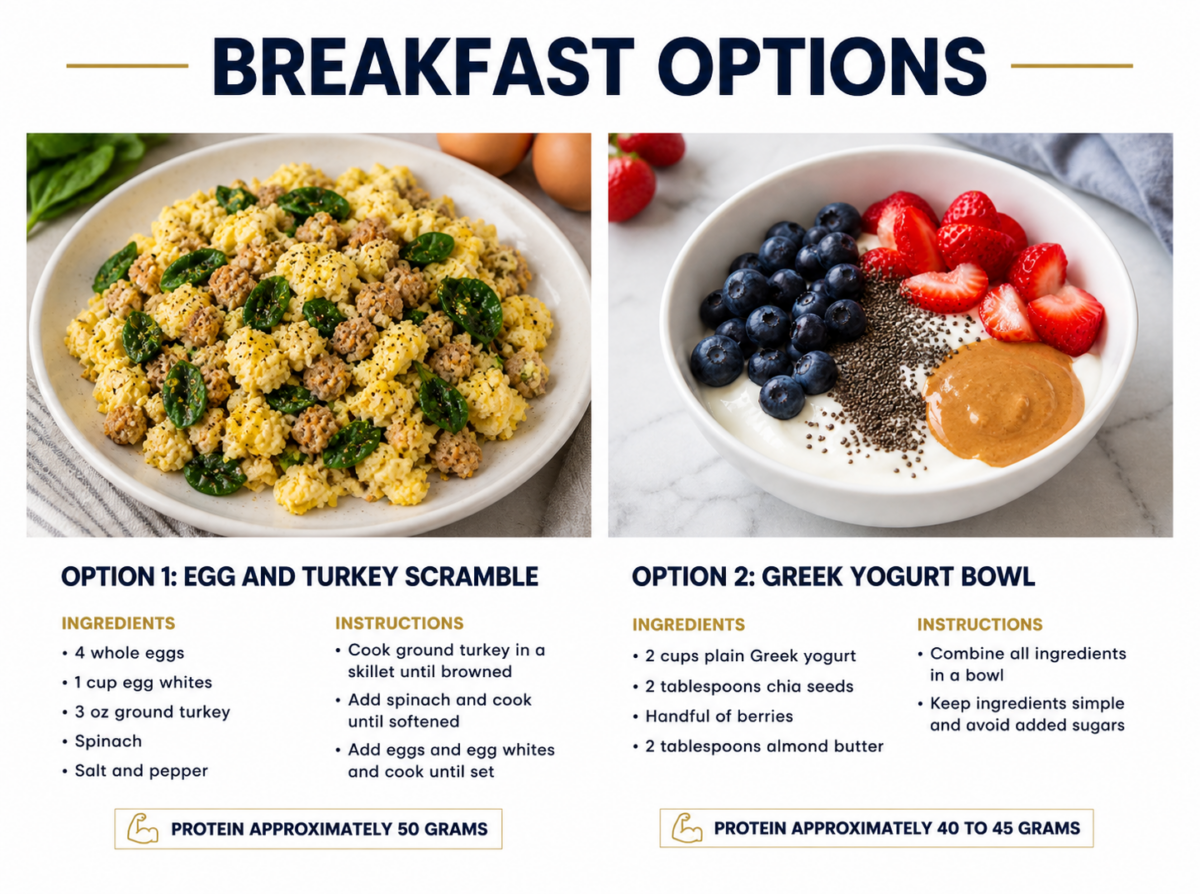
Option 1 Egg and Turkey Scramble
Ingredients
• 4 whole eggs
• 1 cup egg whites
• 3 oz ground turkey
• Spinach
• Salt and pepper
Instructions
• Cook ground turkey in a skillet until browned
• Add spinach and cook until softened
• Add eggs and egg whites and cook until set
Protein approximately 50 grams
Option 2 Greek Yogurt Bowl
Ingredients
• 2 cups plain Greek yogurt
• 2 tablespoons chia seeds
• Handful of berries
• 2 tablespoons almond butter
Instructions
• Combine all ingredients in a bowl
• Keep ingredients simple and avoid added sugars
Protein approximately 40 to 45 grams
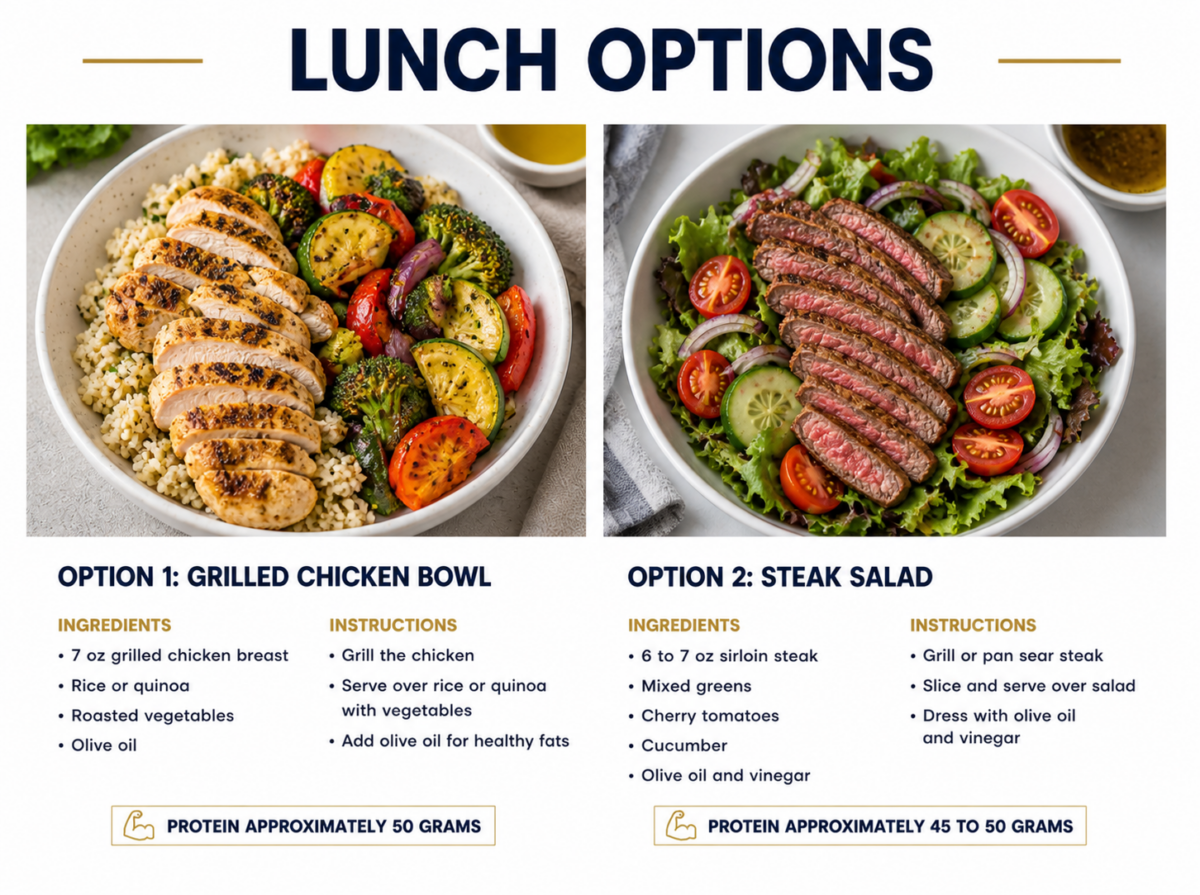
Option 1 Grilled Chicken Bowl
Ingredients
• 7 oz grilled chicken breast
• Rice or quinoa
• Roasted vegetables
• Olive oil
Instructions
• Grill the chicken
• Serve over rice or quinoa with vegetables
• Add olive oil for healthy fats
Protein approximately 50 grams
Option 2 Steak Salad
Ingredients
• 6 to 7 oz sirloin steak
• Mixed greens
• Cherry tomatoes
• Cucumber
• Olive oil and vinegar
Instructions
• Grill or pan sear steak
• Slice and serve over salad
• Dress with olive oil and vinegar
Protein approximately 45 to 50 grams
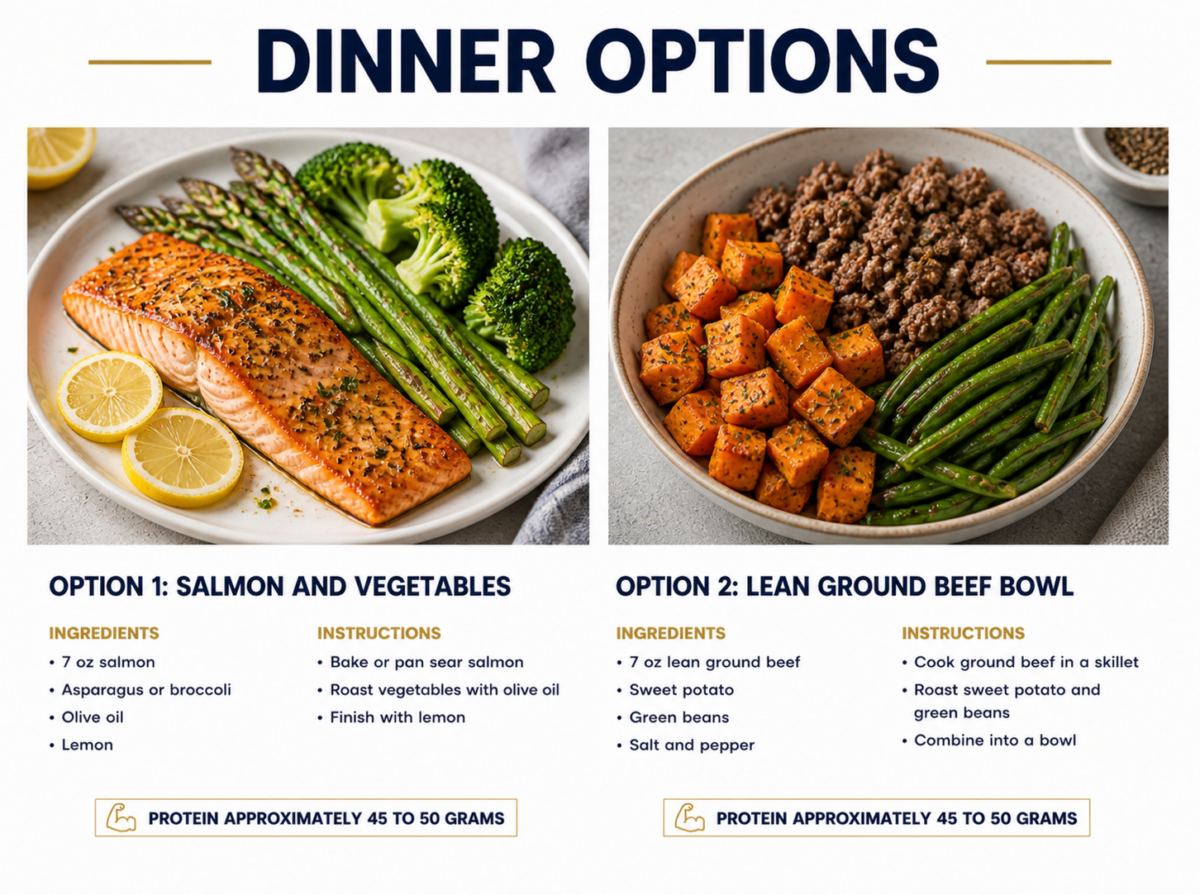
Option 1 Salmon and Vegetables
Ingredients
• 7 oz salmon
• Asparagus or broccoli
• Olive oil
• Lemon
Instructions
• Bake or pan sear salmon
• Roast vegetables with olive oil
• Finish with lemon
Protein approximately 45 to 50 grams
Option 2 Lean Ground Beef Bowl
Ingredients
• 7 oz lean ground beef
• Sweet potato
• Green beans
• Salt and pepper
Instructions
• Cook ground beef in a skillet
• Roast sweet potato and green beans
• Combine into a bowl
Protein approximately 45 to 50 grams
Managing Protein Deficiency and Allergic Reactions
Protein deficiency is a serious health concern that can lead to muscle loss, weakened immunity, and an increased risk of infections. Symptoms may include fatigue, muscle wasting, swelling, and delayed wound healing. To prevent protein deficiency, it’s important to follow a healthy diet that includes a variety of protein-rich foods from both plant and animal sources.
In some cases, individuals may experience allergic reactions to certain protein foods. These reactions can range from mild symptoms like hives, itching, or an upset stomach to more severe issues such as swelling, difficulty breathing, or even life-threatening anaphylaxis. If you notice any symptoms of a protein allergy, it’s essential to contact a healthcare provider immediately. Early intervention can help manage symptoms and reduce risk.
A healthcare provider can help diagnose the allergy and create a treatment plan tailored to your needs. For those who struggle to meet their protein requirements through food intake alone, protein powders or dietary supplements may be recommended. It’s important to choose high-quality, allergen-free supplements and to consult your healthcare provider before starting any new product, especially if you have a history of allergic reactions or other health conditions.
Common Mistakes to Avoid
• Skipping protein at breakfast
• Relying only on shakes instead of whole foods
• Not adjusting protein intake while on GLP 1 therapy
• Avoiding strength training during weight loss
• Not tracking body composition
• Choosing protein powders or shakes that contain large amounts of added sugars, calories, or other non-protein ingredients
• Not checking for added vitamins in protein supplements and shakes
Final Takeaway
For men, 200 grams of protein is not about excess. It is about precision.
When combined with resistance training and a structured clinical approach, it allows for
- Fat loss while preserving muscle
- Improved metabolic health
- Better long term outcomes
Protein is generally safe for most people when consumed as part of a balanced diet. Additionally, some peptide-based therapies and medications are FDA approved, ensuring their safety and efficacy for medical use.
At Yoo Direct Health, the goal is not just weight loss. The goal is to preserve muscle, optimize metabolism, and support longevity.
Protein is one of the most powerful tools to achieve that.
Hitting the number is the easy part. Knowing whether it is translating into muscle, metabolism and better markers takes measurement, which is what our longevity medicine work is built around. Request an appointment to see where you stand.