At Yoo Direct Health, aesthetic medicine is about more than surface-level enhancement. Our approach focuses on cellular health, tissue regeneration, and long-term resilience—because how you age is determined at the biologic level.
One of the most powerful tools we use to support this philosophy is peptide therapy.
Peptides are short chains of amino acids that act as signaling molecules in the body. Peptides are strings of molecules called amino acids, which are the building blocks of proteins. Peptides are basically short proteins, typically about 2-100 amino acids long. Rather than forcing a cosmetic change, peptides communicate with cells, directing them to repair tissue, reduce inflammation, and restore healthy function. Peptides act as messengers by binding to specific receptors on cell surfaces and triggering physiological responses. When used thoughtfully, peptides enhance aesthetic outcomes while simultaneously supporting medical and regenerative health.
Why Yoo Direct Health Integrates Peptides Into Aesthetic Care
Traditional aesthetic treatments often focus on what’s visible. At Yoo Direct Health, we focus on why aging occurs in the first place—key components that influence skin aging and longevity, such as loss of collagen signaling, chronic inflammation, impaired healing, and declining cellular communication.
Regenerative aesthetics is built on concepts that integrate both visible and underlying biological changes.
Peptides allow us to:
- Support collagen and elastin production at the cellular level
- Improve healing after aesthetic procedures
- Reduce inflammation that accelerates skin aging
- Enhance long-term skin and hair quality
- Align aesthetic treatments with regenerative and longevity medicine
This is regenerative aesthetics—designed to age well.
GHK-Cu (Copper Peptide) and Collagen Peptides: The Foundation of Skin and Hair Regeneration
GHK-Cu is one of the most extensively studied peptides in dermatology and regenerative medicine. Naturally present in the human body, its levels decline with age, contributing to thinner skin, delayed wound healing, and visible signs of aging. GHK-Cu and other peptides are commonly used in cosmetics, such as creams and serums, to improve skin health.
How GHK-Cu Supports Aesthetic Outcomes
Aesthetic Benefits
- Stimulates collagen and elastin production
- Improves skin firmness, elasticity, and texture
- Softens fine lines and wrinkles
- Enhances healing after microneedling, laser treatments, and injectables
- Supports hair follicle health and thickness
Medical & Regenerative Benefits
- Anti-inflammatory and antioxidant effects
- Promotes angiogenesis (new blood vessel formation)
- Supports nerve and tissue regeneration
- Improves scar remodeling and wound repair
At Yoo Direct Health, GHK-Cu is often paired with in-office aesthetic procedures to improve both recovery and long-term results, allowing skin quality to continue improving over time.
Thymosin Beta-4: Faster Healing, Better Tissue Quality
Thymosin Beta-4 is a naturally occurring peptide involved in cell migration, tissue repair, and inflammation modulation. While commonly used in regenerative and sports medicine, it plays a critical role in aesthetic recovery. Peptides like Thymosin Beta-4 can also support the immune system by modulating immune responses and promoting healing.
- Accelerates wound healing
- Reduces inflammation and swelling
- Improves tissue quality and elasticity
Additionally, antimicrobial peptides can help strengthen the immune system by targeting harmful bacteria and viruses, which may also help manage skin conditions such as acne.
Why We Use Thymosin Beta-4 in Aesthetic Protocols
Aesthetic Benefits
- Accelerates healing after aesthetic procedures
- Reduces post-treatment inflammation and swelling
- Improves skin texture and elasticity
- Supports a healthy hair follicle environment
Medical Benefits
- Promotes angiogenesis and tissue regeneration
- Reduces fibrosis and chronic inflammation
- Supports vascular and cardiovascular health
For patients undergoing more intensive aesthetic treatments, Thymosin Beta-4 helps ensure faster recovery, stronger tissue repair, and more durable cosmetic outcomes.
BPC-157: Supporting Recovery From the Inside Out
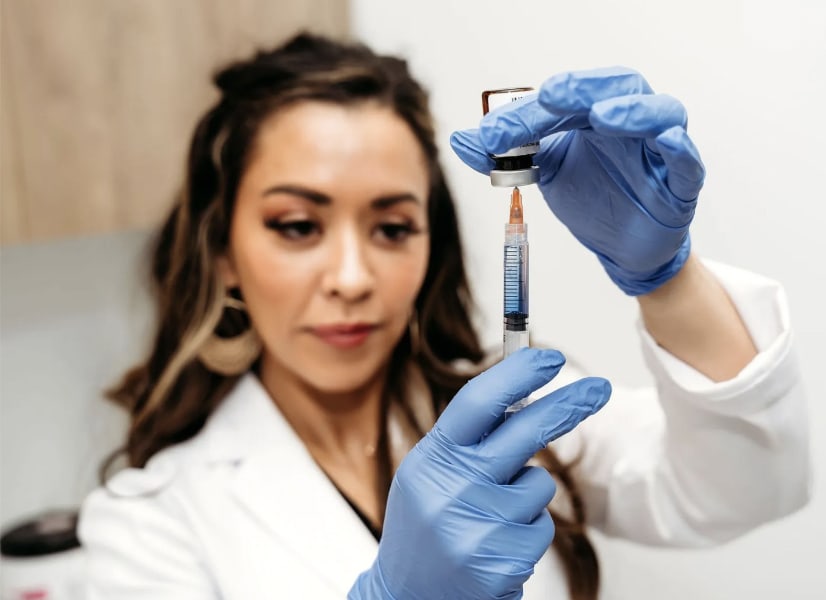
BPC-157 is derived from a naturally occurring protective protein found in the body. Peptides like BPC-157 can be administered in various forms, including injections, oral supplements, and topical creams; the form used can significantly impact their stability, absorption, and overall effectiveness. While not traditionally considered an aesthetic peptide, it is essential in supporting the biologic foundation of healing.
- Accelerates tissue repair
- Reduces inflammation
- Supports joint and tendon recovery
Peptide injections are often preferred over oral supplements because they may be more effective due to stability issues that can affect absorption and results.
The Role of BPC-157 in Aesthetic Care
Aesthetic Support Benefits
- Speeds healing after injectables, microneedling, and laser treatments
- Reduces inflammation and swelling
- Supports healthy scar formation
- Improves tissue resilience
Medical Benefits
- Repairs connective tissue, tendons, and ligaments
- Supports gut integrity and inflammation regulation
- Enhances vascular repair
- Protects tissues from inflammatory damage
At Yoo Direct Health, BPC-157 is often combined with other regenerative peptides to support whole-body healing, ensuring that aesthetic improvements are built on healthy tissue function.
Our Philosophy: Aesthetics Backed by Biology
At Yoo Direct Health, we believe aesthetic results should not be temporary or fragile. Aesthetic outcomes are influenced by the underlying biology of skin and tissue, and peptide therapy helps ensure that results are natural, resilient, and long-lasting.
Peptides allow us to:
- Improve the quality of aesthetic outcomes
- Enhance healing and recovery
- Support skin and hair health at the cellular level
- Integrate aesthetics seamlessly with regenerative medicine (regenerative medicine and aesthetic outcomes are closely linked)
This approach treats aging as a biologic process—one that can be supported intelligently and proactively.
All peptide therapies we use are well-tested and generally safe when administered under the direction of a doctor.
Final Thoughts
Regenerative aesthetics represents the future of aesthetic medicine. Scientists continue to study the effects of peptides on skin, hair, and tissue health. By integrating peptides such as GHK-Cu, Thymosin Beta-4, and BPC-157, Yoo Direct Health offers a science-driven approach to improving skin and hair health while supporting deeper tissue repair. The pursuit of longevity, as seen in long lived people, inspires regenerative aesthetics to help individuals achieve a longer, healthier life. Regenerative aesthetics is also inspired by the nature of biological processes and healing, aiming to work with the body’s natural mechanisms. The benefits of regenerative aesthetics can impact the broader population, not just individuals, by promoting overall wellness and improved quality of life. The term longevity is central to this approach, emphasizing the goal of living a longer and healthier life.
This is not about overcorrecting appearance. It’s about restoring function—and letting aesthetics follow.
The use of peptides has surged due to claims of anti-aging effects and endorsements by influencers, despite limited scientific evidence.
Learn more on The Better Yoo Podcast!
References
- Pickart L, Margolina A. GHK Peptide as a Natural Modulator of Multiple Cellular Pathways. Biomed Research International. 2018.
- Muthukumarasamy S et al. Copper Peptides and Skin Regeneration. International Journal of Cosmetic Science.
- Goldstein AL et al. Thymosin Beta-4: A Key Regulator of Tissue Repair. Annals of the New York Academy of Sciences.
- Sikiric P et al. BPC-157 and Tissue Healing. Journal of Physiology and Pharmacology.
- Paus R et al. Peptides and Hair Follicle Biology. Journal of Investigative Dermatology.